Travel Blog: Pollinators & Daisies
The North Fork, Part 2: Pollinators & Daisies Staying up the North Fork enabled easier exploration of the land surrounding the western side of Glacier National Park, particularly Glacier View Ranger District, the northernmost district of the Flathead National Forest. I boondocked in this district for a month, moving once to comply with the regulations that limit stays in one place to 16 days. While in Flathead NF I hiked mostly the forest roads. They were better maintained than the hiking trails noted on my map.
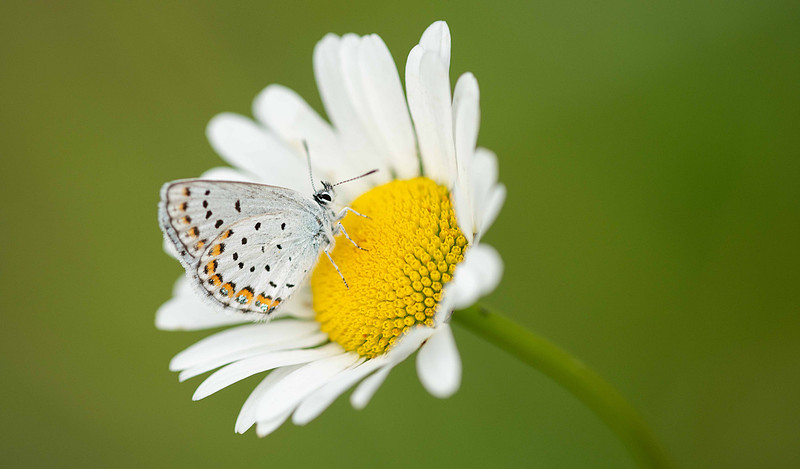
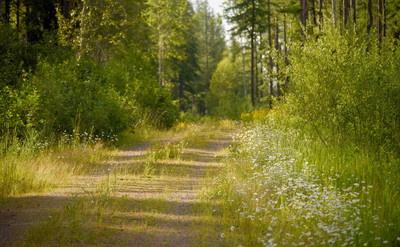
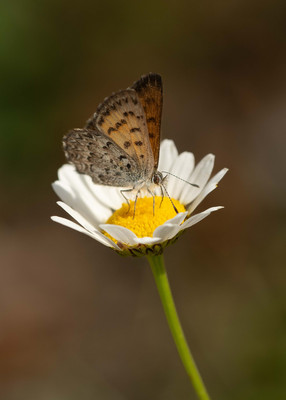
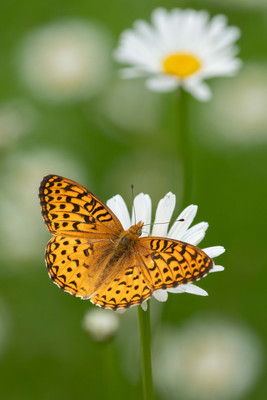
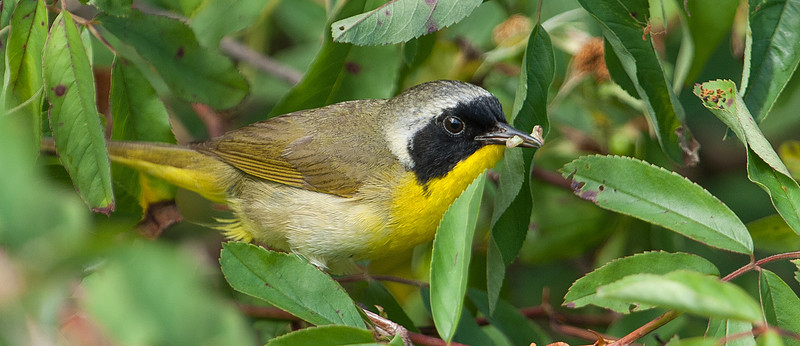
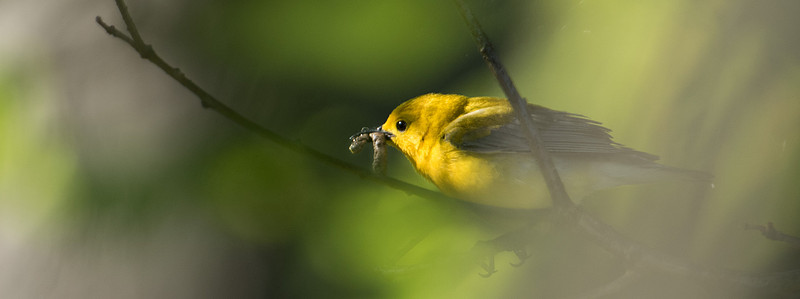
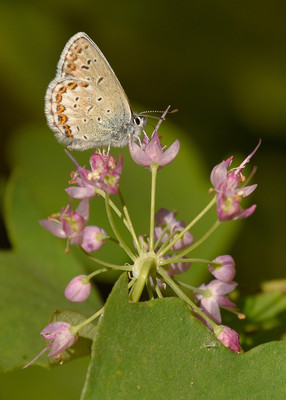
The gravel road behind my first campsite was accessed by only a few hikers and mountain bikers while I camped there. I found it a very quiet and pleasant place. A sign indicated the road was closed to protect wildlife habitat, though I imagine they open it up for hunting season and logging. I found moose and bear scat along the road, but the only wildlife I observed were white-tailed deer, birds, and lots of butterflies and other pollinators.
The thing that drew so many pollinators to
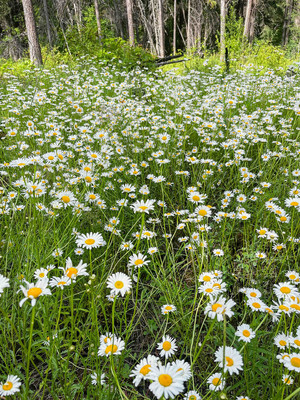
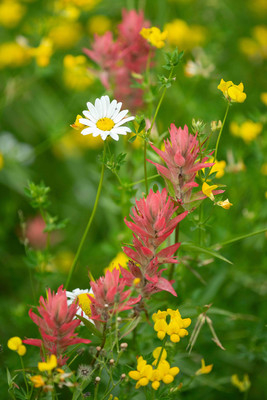
One clue to the origins of the plants was that some species occurred in masses. I was delighted by their beauty and the abundance of butterflies, moths, bees and wasps frequenting them. But, being familiar with plant communities, my delight was tempered by the knowledge that such prolific numbers of a few species likely meant they were not native to this region, or even this continent.
A large colony of one species does not always mean it is not native. Take for example, Virginia Bluebells (Mertensia virginica), a fantastic eastern native that forms expansive colonies along the floodplains of rivers like Cedar Run, Bull Run and the Potomac River in Northern Virginia; or Fireweed (Chamerion angustifolium) an herbaceous perennial native in many western states that specializes in recolonizing burnt forests. Both of these examples thrive on natural disturbances: flooding and fire, respectively. But when located in an area disturbed by human activity, the likelihood of a prolific plant being an invasive alien species increases.
During my stay up the North Fork, I attended a class for another of the volunteer programs hosted by Glacier’s Citizen Science program, the Weed Blitz. Park biologist Dawn La Fleur educated us on the life histories and impacts of many non-native invasive plants in Glacier National Park and the western intermountain states in general. It was disheartening to learn that there were many more than the two I knew. I had hoped that the more pristine environments of Glacier NP and its surrounds had escaped the onslaught of non-native plants affecting so much of our country. One of the top invaders Dawn noted was the most common herbaceous plant I saw along my national forest hikes, the Oxeye Daisy (Leucanthemum vulgare).
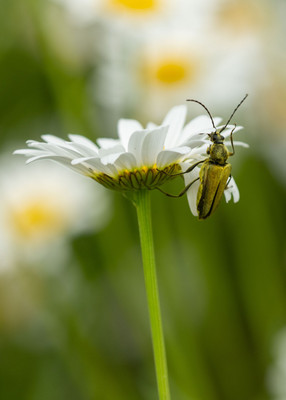
The Oxeye Daisy is native to Europe and parts of Asia. It was introduced to North America as an ornamental. It is quite pretty, blooms over a long period and its spreading rhizomes easily form colonies effectively brightening a garden with little effort. Its wind dispersed seeds have aided its escape from gardens. It is also included in some wildflower mixes, which exacerbates its spread.
When you hear “wildflower mix” you might presume all the contents are a natural part of the “wild” around you. Not so. Such mixes have helped the Oxeye Daisy invade natural environments in all 50 states and most of Canada. And that’s only one example of a non-native included in some mixes.
After Dawn’s class I realized that, in terms of raw numbers, far more than half of all the herbaceous wildflowers I was passing on the roadsides of my hikes were not native to North America.
So, why would the presence of non-native wildflowers, in all their beauty, be of concern? The answer starts with the basics of ecology and the food web. Every creature has specific biological and environmental requirements that enable it to live freely and reproduce. For example, every animal has foods that it can eat and those it can’t. The list of edible and non-edible foods varies from species to species.
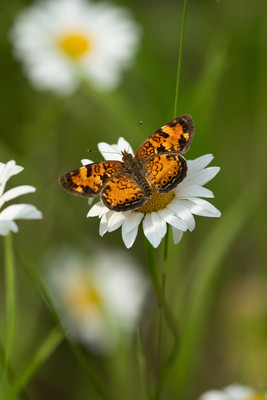
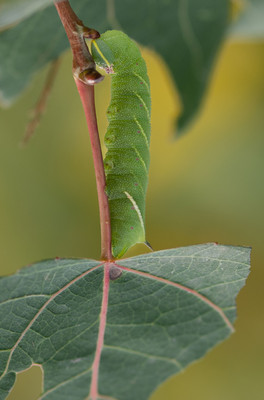
This might be obvious, but perhaps we don’t fully consider what is happening when we see a lovely Pearl Crescent butterfly feeding on the nectar of an Oxeye Daisy. We may think that since the Pearl Crescent is getting food from the daisy that it has everything it needs. Indeed, the adult Pearl Crescent (a butterfly) can feed on the nectar produced by flowers from a wide variety of plants, including many non-natives (for more on nectar see Notes below). This is generally true of butterflies, moths and skippers in their adult stage. However, the Pearl Crescent’s larvae (caterpillars) don’t feed on nectar at all, but rather plant leaves. Furthermore, their larvae are specialists, able to feed on only one genus of plants: Symphyotrichum.
Symphyotrichum is the genus of several native asters including the Smooth Blue Aster (S. laeve). Let’s consider this one example from the genus Symphyotrichum. The Smooth Blue Aster is a plant of grasslands, meadows, forest openings, and disturbed areas like roadsides; the same habitats commonly invaded by the Oxeye Daisy.
If the Oxeye Daisy invades the same area where the Smooth Blue Aster grows, the daisy will have the advantage. One common characteristic of aggressive, non-native herbaceous plants is their tendency to grow more quickly than the natives they displace. More rapid growth may be aided, in part, by the alien plant not needing to expend as much energy producing chemicals to defend against herbivores. Instead, it can reallocate that energy to growth.1 This gives the Oxeye Daisy an advantage in competition for sunlight, water and nutrients. As the daisy dominates the area, the Pearl Crescent’s larval food source may be reduced or eliminated.
You may wonder, “Why don’t the caterpillars just feed on the Oxeye Daisy?” Very few animals in North America will feed on the vegetative parts of Oxeye Daisy because the chemical make-up of its leaves and stems is foreign and unpalatable to most of our native herbivores. In fact, in Europe, where Oxeye Daisy is native, approximately 80 species of herbivores feed on it2. Here in North America some domestic livestock will graze on it, but only 1 native herbivore, the Blackberry Looper Moth (Chlorochlamys chloroleucaria), is known to feed on it. And this is true despite the Oxeye Daisy being in the same taxonomic family (Aster family) as Symphyotrichum. This is a common pattern with introduced species. They are the food for many species of herbivores where they are native, but few to no herbivores will eat them where they have no long-term ecological history.
Various research has documented similar comparisons with other introduced plants. For example, a study on the highly invasive Melaleuca tree impacting Florida found that where Melaleuca is native in Australia 409 species of herbivores feed on it. Only 8 herbivores were found feeding on it in Florida.3 In essence, when non-native plants displace natives, food resources are lost.
Perhaps you’ve limited your idea of herbivores to large wildlife like deer or moose. But the greatest number of herbivores are insects, making them an important part of the food web. For so many songbirds that we enjoy, the connection in the food web between native plants and native insect herbivores has serious implications. As non-native plants increasingly displace the native species, the number of caterpillars that land supports will decline.
A study by Desiree Narango, et. al., looked at the relationship between native plant biomass and survival rates of the chicks of one of our most common (though declining) native songbirds, the Carolina Chickadee. Her study showed that in a suburban area, when the percentage of native plant biomass (think leaves) is reduced below 70% Chickadee parents can not find enough larval insect food to raise enough chicks to replace the adults that die. As non-native plants replace our native plants, our yards and neighborhoods become unable to sustain the birds we love and enjoy4.
The good news is that we, as landowners, can do something about this. It’s actually easy and very rewarding. By simply choosing to landscape our yards with native species and creating native plant communities that include natural leaf litter as a ground cover in place of lawn, we can make our properties landscapes of life for our fellow creatures. I’ll blog more about this in the months to come. So stay tuned!
Notes: Not all nectar is created equal. There can be significant differences in the amount of sugars (carbohydrates) a given species or plants within a species produce, as well as differences in amino acids and other substances a plant produces in its nectar. Something to learn more about as we seek to understand plant/pollinator relationships. Here’s one good article on this. https://botanic-garden.bristol.ac.uk/2014/05/27/the-science-of-nectar/ Here's a good article that covers the relationship of native plants, native herbivorous insects and our native birds. https://e360.yale.edu/features/how-non-native-plants-are-contributing-to-a-global-insect-decline
References: 1. Montesinos D. Fast invasives fastly become faster: Invasive plants align largely with the fast side of the plant economics spectrum. Journal of Ecology. 2022;110:1010–1014. https://doi.org/10.1111/1365-2745.13616 2. Biological Control of Oxeye Daisy. CABI (Centre for Agriculture and Biosciences International). https://www.cabi.org/projects/biological-control-of-oxeye-daisy/ 3. Costello, Sheryl & Pratt, Paul & Rayamajhi, Min & Center, Ted. (2003). Arthropods associated with above-ground portions of the invasive tree, Melaleuca quinquenervia, in South Florida, USA. Florida Entomologist. 86. 300-322. 4. Narango, Desiree, L., D.W. Tallamy and P.P. Marra. Nonnative Plants Reduce Population Growth of an Insectivorous Bird. PNAS October 22, 2018. 115(45):11549-11554. https://doi.org/10.1073/pnas.1809259115
Next Up: Mushrooming in the North Fork.
Comments
Ruth H.(non-registered)
This was an interesting post and I learned some things!
No comments posted.
Loading...
|