Travel Blog: Bald Point State Park, Florida
Travel Blog: Bald Point State Park, Florida
Upon leaving Tate's Hell State Forest, my next destination, St. Marks National Wildlife Refuge, was a little more than an hour away - significantly less as the Swallow-tail Kite flies, but the Kite doesn't have to build bridges. I would admire the Kite, sigh, and resign myself to the land-bound route.
On the way I would pass Bald Point State Park and since my day's travel was short, I decided to stop in for an introductory visit.
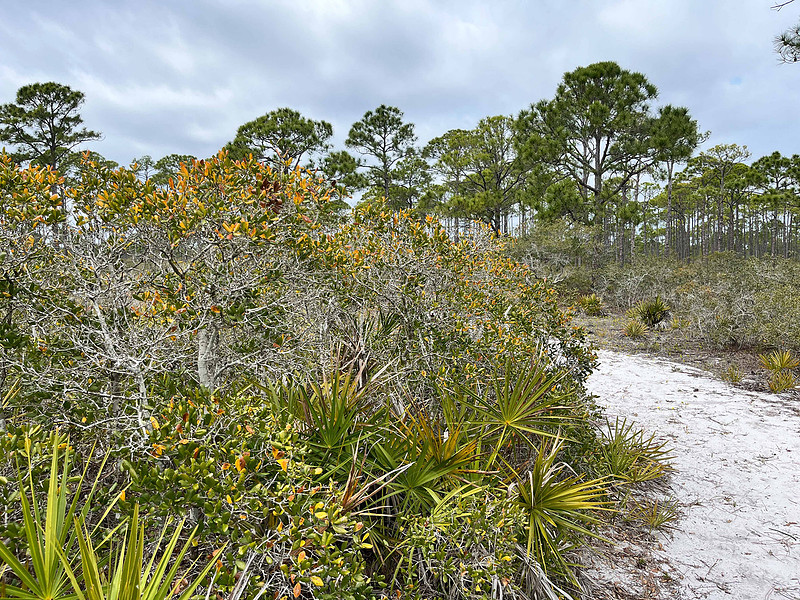
The park occupies over 4800 acres of a peninsula bordered by Ochlockonee Bay to the north, Apalachee Bay to the east, and Alligator Cove to the south. The peninsula is mostly undeveloped and includes access to some of the sandy beach fronts lining these waters. A scattering of fresh water ponds and tidal marshes with squiggly streams mark the inland areas.
I chose to hike the pleasant and well-marked Sundew Trail, a roughly 2 mile loop that started from the parking area on Sunrise Pointe Estates Road just off of Bald Point Rd. The trail was mostly open scrub savannah and was flat as a pancake. For most people this would be a quick 45 minute hike. But when I have my camera at hand interesting plants and critters will turn 45 minutes into a few hours. And I found several plants and critters to interest me.
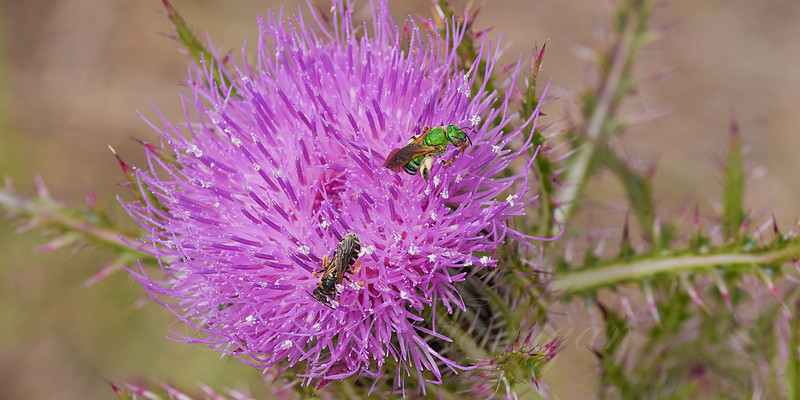
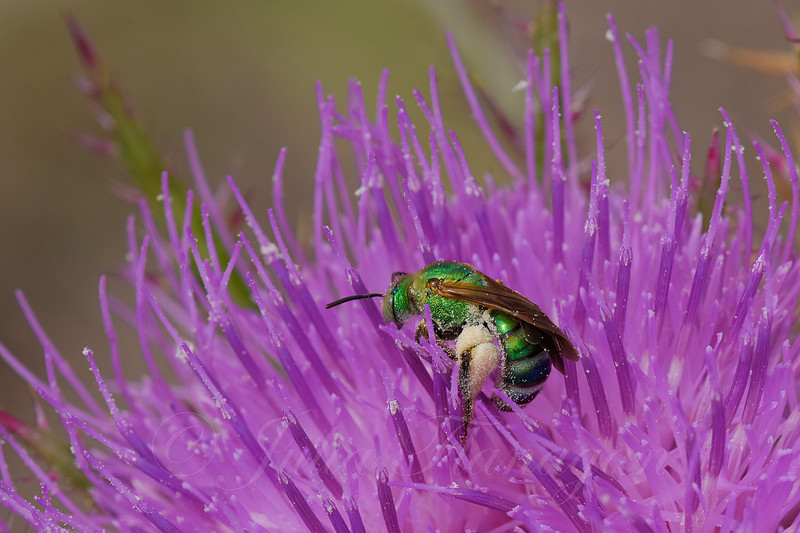
A green metallic bee was loading her hind legs with the pollen from what I think is the Florida native Bristle Thistle (Cirsium horridulum) - those who know thistles and for that matter metallic bees better, feel free to correct my ID in the comments. That must have been quite a load to haul for so small a bee.
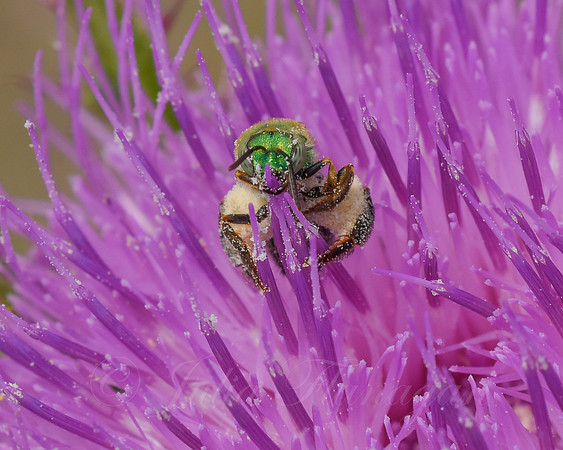
Apparently, the pollen she seeks is produced on the inside of each stamen of the disc floret. In these images the stamen is the darker part of the tube with pointed ends. The flower's pistils develop inside the fused stamens. You can see on many of the florets where the lighter pistils have pushed up through the fused stamens and brought with them the light yellow pollen, exposing it and enabling the bee to gather it.
In the images I've presented here, this would be a female bee who is collecting pollen for the larvae she has laid either in a nest dug in the ground or possibly in a fallen log or in tree bark, depending on the species of bee. She will build an individual nest cavity for each larvae and stock it with pollen, probably mixed with her saliva and possibly some nectar to make nutritious meals for her larvae to feed upon until they have pupated and are ready to emerge from their nest holes.
It looks to me, from my image above, that the green metallic bee has a system of gathering a small cluster of disc florets together and using her legs to either move the light yellow pollen grains to her mouth to feed herself, or to her hind legs, where she collects pollen as though in big saddle bags before taking it back to the nests she is building. Perhaps she uses her saliva to help the grains of pollen stick together so they don't just fall off her hind legs.
I thoroughly enjoyed checking out the unfamiliar plants, some new to me, while others I was starting to recognized from my time at Tate's Hell State Forest.
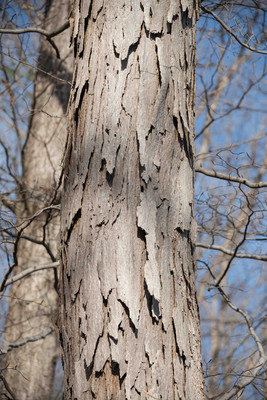
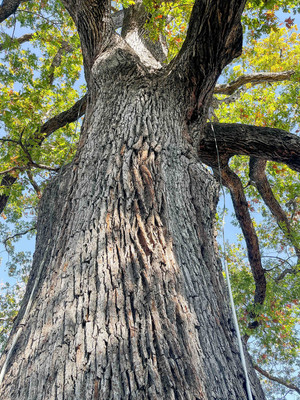
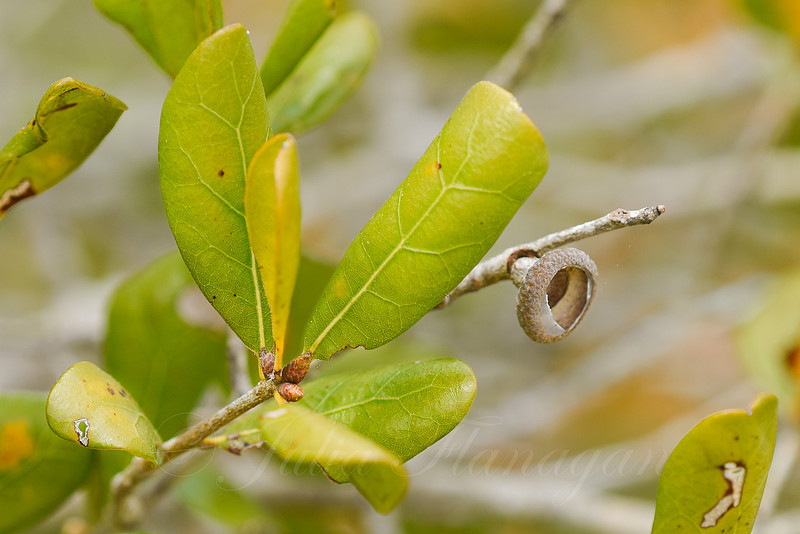
Perhaps the most interesting to me was the Florida Oak (Quercus inopina). In Northern Virginia when someone says "oak", invariably tall stately trees invade the imagination. White Oaks (Q. alba) are kings of the forest, with their regal form, soaring boles with bark that forms long, light gray plates that separate from the trunk along one edge, as though the tree were just about to reveal to you that it has hidden wings. Tall and straight in a forested setting, in an open-grown setting a White Oak can spread its massive limbs like a gigantic domed mushroom 30' to 40' from the parent trunk.
At least another 12 or 13 species of oaks are also in those forests, all able to reach great heights, though perhaps none more than the Shumard Oak (Q. shumardii). I met a Shumard Oak in Prince William County that I was proud to see become the Virginia State Champion Shumard Oak. It reached 154' in height. I measured it myself - a few times, including with a colleague because I couldn't believe my readings. That's at least 50' taller than the great majority of oaks in the forest. It ruled as the largest Shumard in the state for 2 years, until its great height couldn't withstand a strong wind that felled it when by all accounts it was otherwise quite healthy.
With oaks like these, one can understand why the prophet chose his imagery in Isaiah 61 as he proclaims good news to the poor, the brokenhearted and the captives. The Lord will show them his favor; turning their ashes into beauty, giving them a garment of praise instead of despair. Isaiah proclaims that through the Lord's redemption they will be transformed so gloriously that they would become known as "Oaks of Righteousness".1
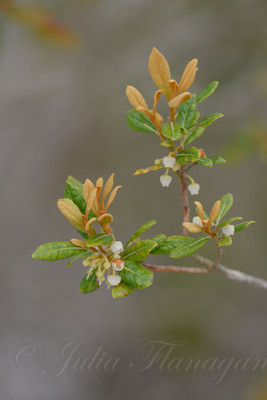
But here before me, in these sandy soils that somehow drain poorly, was a scraggly shrub, bent, wind torn and no more than 6' tall. It seemed to have more in common with the poor and brokenhearted with its short and contorted limbs, many of which were dead; and its small, evergreen leaves curled in on themselves as though parched by the sun and deprived of nutrition.
I stood for some time examining it, wondering what it was.
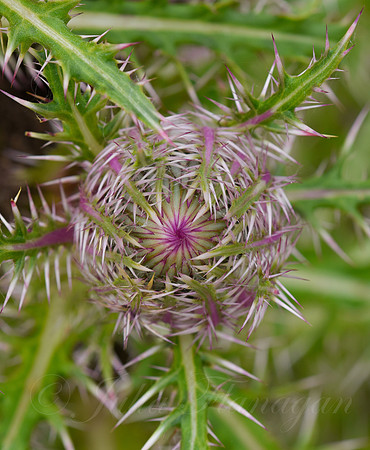
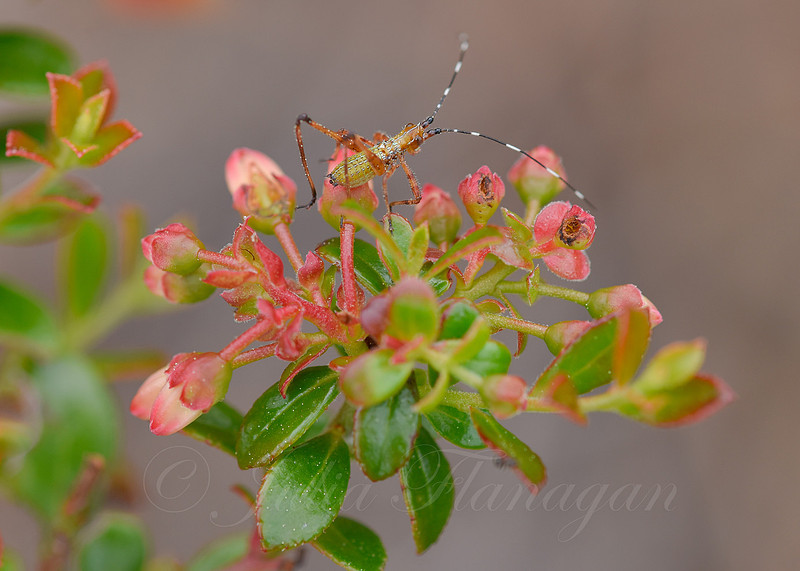
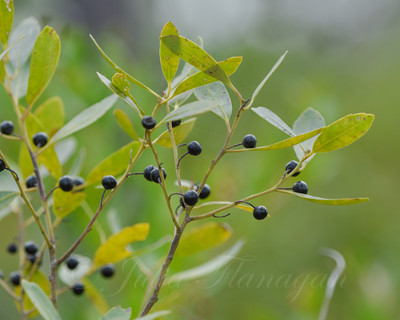
Other plants remain a mystery. Perhaps you can help me with some ID for the unknown plants I've noted in the images above. Just post your thoughts in the comments.
Notes: 1. See The Holy Bible. New International Version. 1984. Isaiah 61:1-6.
Next Up: St. Marks National Wildlife Refuge
All photos, videos and text are Copyright ©Julia Flanagan unless otherwise noted. All rights reserved.
Keywords:
Bald Point State Park,
Bush Katydid,
exploring Nature,
Florida,
Green Metallic Bee,
Julia Flanagan,
New Earth Photo,
nomadic,
Parks,
Pollinator,
RV
Comments
No comments posted.
Loading...
|