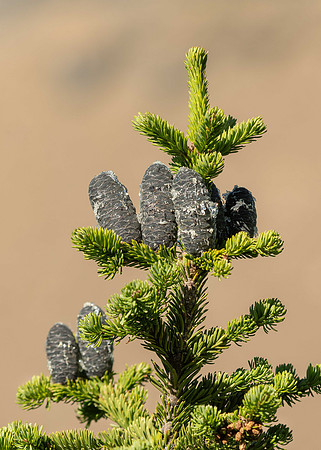
 Subalpine Fir (Abies lasiocarpa) is a Subalpine specialist. The dominant species of tree in this harsh environment. Its deep purple cones stand upright and often ooze sap. A tree mature enough to produce cones is typically 20 years old or more, but may only be 5' or 6' tall.
 Going to the Sun road:
Part 2, Subalpine Wildflowers
As one nears Logan Pass the plant community changes noticeably as you enter the Subalpine Zone. Subalpine Fir (Abies lasiocarpa) becomes the dominant species of tree even as its size decreases and its form becomes contorted by the increasingly harsh environmental conditions. Lower elevation species like Western Hemlock, Ponderosa Pine, Black Cottonwood, Quaking Aspen and Lodgepole Pine fall away with the higher elevations. Closed canopy forests disappear except for small clusters of Subalpine Fir that seem to find protection from the winds by huddling together, not unlike the Emperor Penguins surviving the Antarctic winters by conserving their warmth, standing shoulder to shoulder, heads bowed.
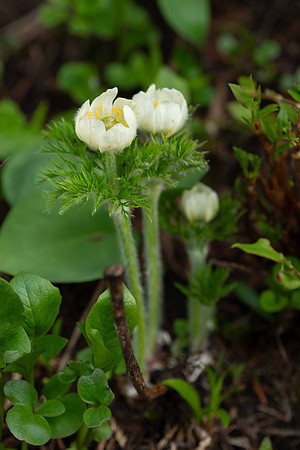 Western Pasqueflower (Anemone occidentalis) a subalpine specialist growing at Logan Pass.
Some species of plants common in the lower elevations are able
Western Pasqueflower (Anemone occidentalis) a subalpine specialist growing at Logan Pass.
Some species of plants common in the lower elevations are able
to make it in the Subalpine Zone. But there are several alpine specialists that you will not find at lower elevations. Species like Arctic Willow (Salix arctica), Explorer's Gentian (Gentiana calycosa),
Glacier Lily (Erythronium grandiflora) and Western Pasqueflower (Anemone occidentalis) will only be found in these high elevations and extreme conditions.
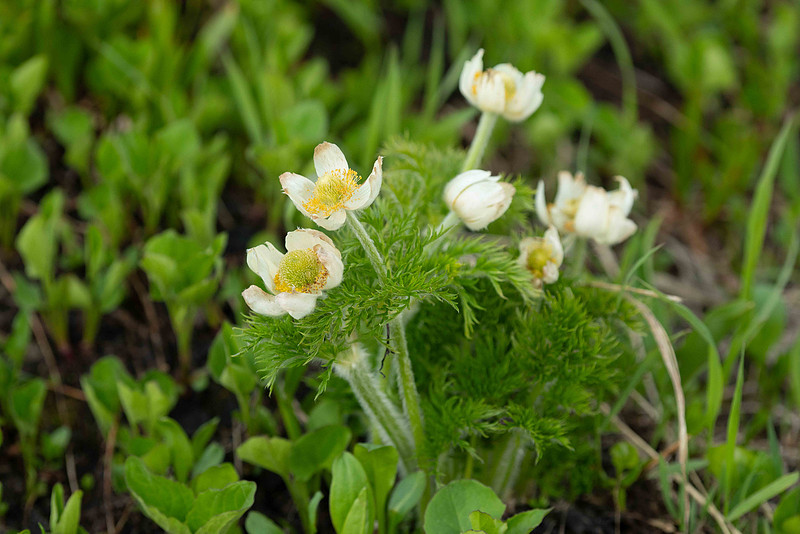 Western Pasqueflower. Note the hairy stem and damaged petals. Western Pasqueflower is an early bloomer (for a subalpine environment anyway). The petals may have been damaged in the late snowfall that fell overnight June 21st. This photo was taken June 28.
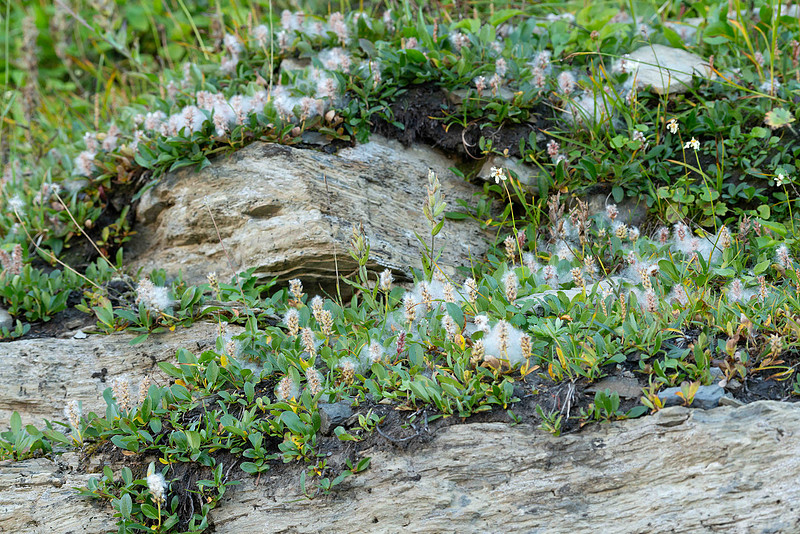 For all you plant lovers out there, what plant do these fruits shedding all that white fuzzy pappus remind you of? Hint: it is a close relative of a wetland loving eastern tree.
If you guessed Willow (Salix sp.) you are right! This is the Arctic Willow (Salix arctica), a circumboreal species that rises no more than 4" - 6".
For all you plant lovers out there, what plant do these fruits shedding all that white fuzzy pappus remind you of? Hint: it is a close relative of a wetland loving eastern tree.
If you guessed Willow (Salix sp.) you are right! This is the Arctic Willow (Salix arctica), a circumboreal species that rises no more than 4" - 6".
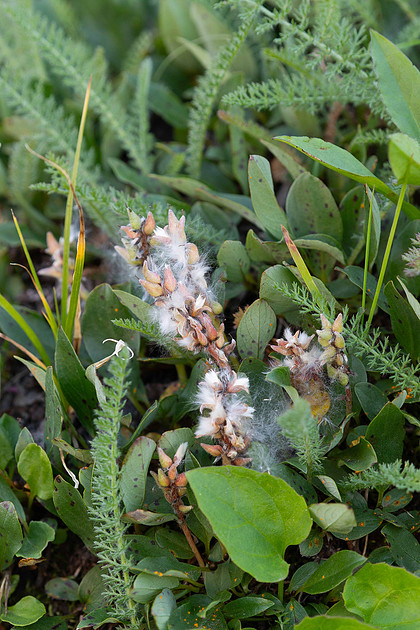 A close-up of Arctic Willow (Salix arctica) showing the seed head with the white pappus attached to the tiny seeds. The pappus aids in carrying the seeds on the wind to new locations. The leaves of the willow are the spoon-shaped grayish green leaves scattered about.
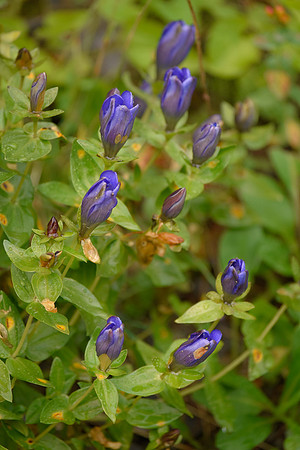 Explorer's Gentian (Gentiana calycosa). I'm a sucker for blue flowers. I find these lovely in the swirling petals of the closed blossom as well as when fully open and welcoming big fat bumblebees to dive head first to find pollen and nectar.
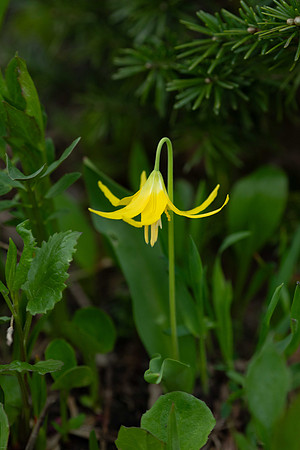 Glacier Lily (Erythronium grandiflorum). An iconic wildflower of Logan Pass and subalpine meadows as they fill the meadows with their brilliant yellow. They are in a hurry to bloom, emerging even as the snowfields are still melting around them. Both Mountain Goats and Mountain Sheep feast upon their flowers.
These Subalpine specialists typically have adaptations that help them withstand the drying and icy winds and snow loads. Most are low-growing, especially if they are woody and persist into winter. Often their leaves are hairy or thick and waxy (or both) - both anatomical features that create a
microclimate at their leaf surface that helps reduce desiccation. Some simply wait for the long sunny days of late spring and early summer when the snowfields have sufficiently melted away before emerging.
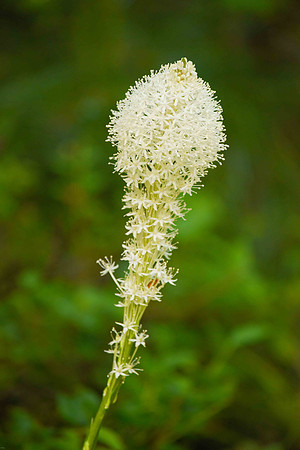 Beargrass (Xerophyllum tenax) is a favorite. You may find it at lower elevations throughout the montane forests. I love seeing it anywhere. But where it really shows off is in the open meadows of the Subalpine Zone where it can form large colonies. I'm still waiting for the opportunity to photograph it in such as setting.
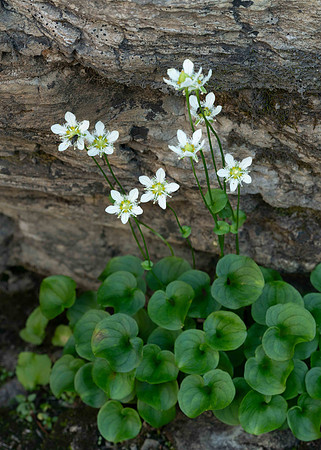 Fringed Grass of Parnassus (Parnassia fimbriata) - so lovely! A plant that in lower elevations hugs stream edges, but in the subalpine zone does well in wet meadows. Its flowers have both fertile and sterile stamens. The sterile stamens (staminodia) circle around the ovary and have glands that may supply nectar to pollinators. I observed several small flies that just couldn't seem to leave the flowers alone.
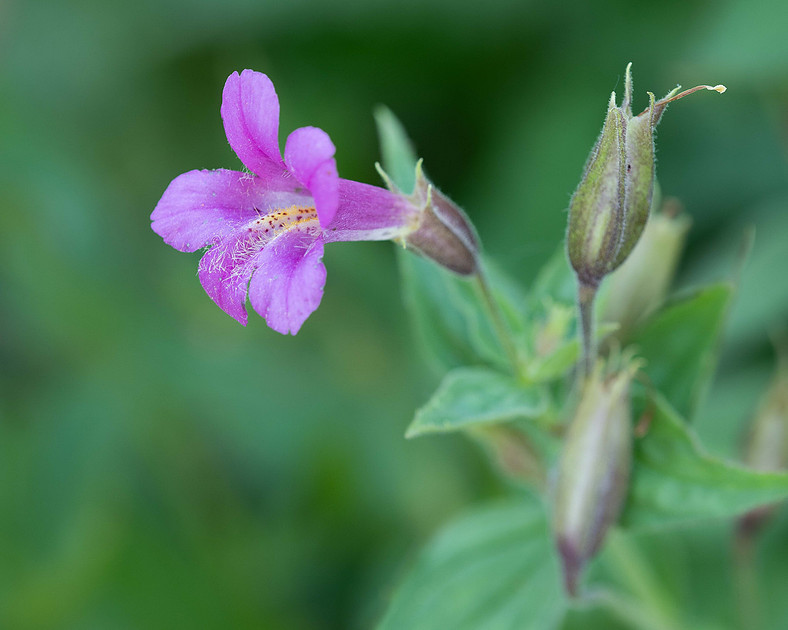 Lewis Monkeyflower (Mimulus lewsii). The flower emits a combination of volatile chemicals that are key to attracting its pollinators. The Lewis Monkeyflower has a combination of chemicals that attract bumblebees, while the closely related Cardinal Monkeyflower (Mimulus cardinalis) attracts hummingbirds.
This beauty is named after Meriweather Lewis of Lewis and Clark fame when he collected and documented it among the hundreds of specimens collected during their exploration of the Missouri and Columbia river drainages in the early 1800's.
Lewis Monkeyflower (Mimulus lewsii). The flower emits a combination of volatile chemicals that are key to attracting its pollinators. The Lewis Monkeyflower has a combination of chemicals that attract bumblebees, while the closely related Cardinal Monkeyflower (Mimulus cardinalis) attracts hummingbirds.
This beauty is named after Meriweather Lewis of Lewis and Clark fame when he collected and documented it among the hundreds of specimens collected during their exploration of the Missouri and Columbia river drainages in the early 1800's.
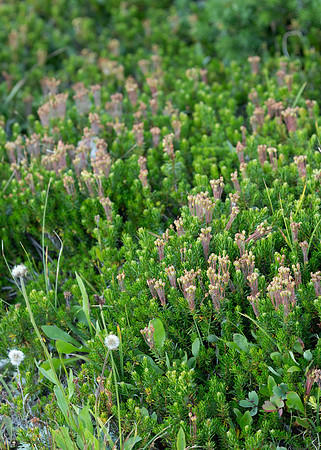 I have no idea what this is. If anyone out there knows - please comment with the answer - thanks!
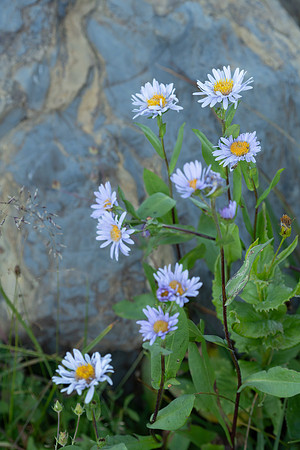 I think this is Wandering Aster (Erigeron peregrinus), but identifying asters puts the fear of Linnaeus in me. My Flora of Glacier National Park makes no mention of the clasping leaves an instead says the lower leaves have petioles. So I certainly could be wrong. In any case it is a very pretty aster that was flowering in abundance over the meadows at Logan Pass.
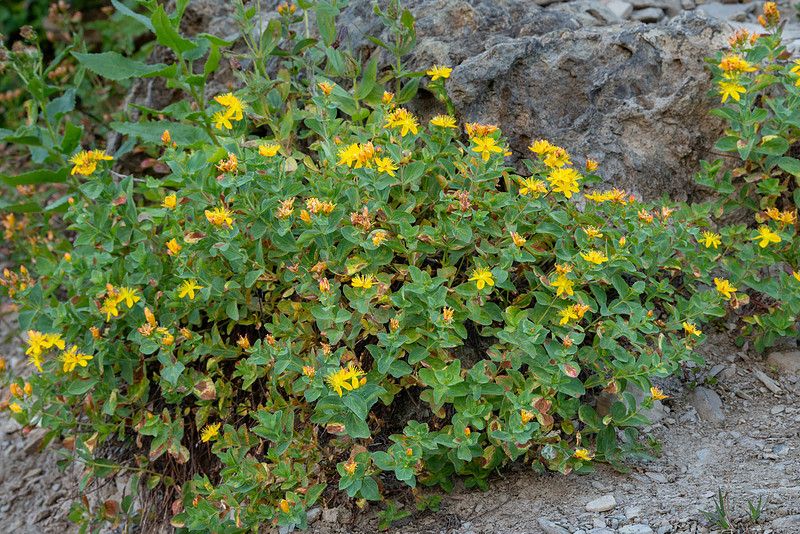 Western St. John's-wort (Hypericum scouleri). This is the only St. John's-wort native to Montana. It is a plant of high elevations that forms pretty clumps of bright yellow flowers with equally pretty red flower bud that break open over a long period of the summer.
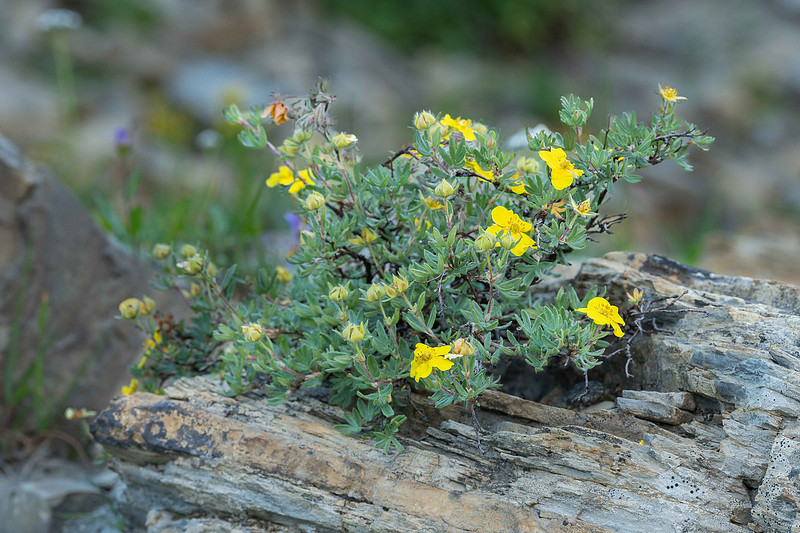 Shrubby Cinquefoil (Penaphylloides fruticosa (aka Potentilla fruticosa). Here's a shrub adaptable to a great range of elevations and moisture regimes. A native across most of the western and northern U.S and Canada. This particular shrub may be a little scruffy looking, but hey- It's living on a rock. I like the cheerful yellow blossoms that bloom over a long period and the greenish gray leaves
All photos, videos and text are Copyright ©Julia Flanagan unless otherwise noted. All rights reserved.
