Travel Blog: Apgar Camping & More Loon Surveys
Apgar Campground & More Loon Surveys
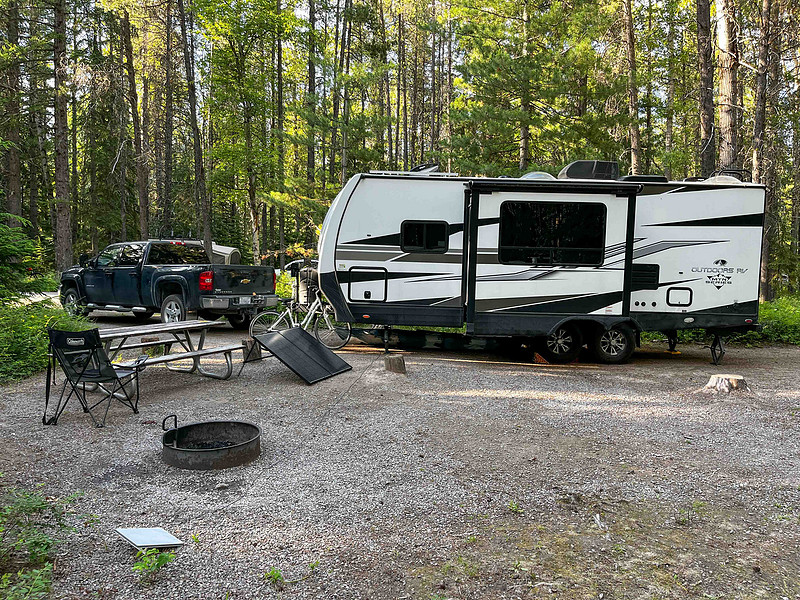
Between staying at Moose Creek RV Resort and heading up the North Fork Road I spent 2 weeks at the Apgar Campground in Glacier National Park. Apgar Campground is on the west side of Glacier National Park. There are no hook ups, but potable water is available at spigots scattered throughout the campground as are flush toilets. The campsites are in a wooded setting. This was my second time dry camping, and my first time in a fairly shaded site.
My campsite yielded only about 4 hours of direct
Apgar was a good trial, showing me I would be wise to choose a boondocking site with full sun.
While Apgar was my home base, I completed a 3 more loon surveys. One took me to a lake on the Blackfeet Nation Reservation. I pulled up to the lake just as a team of 3 young Blackfeet men and women working for Blackfeet Fish and Wildlife were completing a survey of the fish on the lake. They had placed gill nets out the night before and hauled in their catch that morning. When I arrived, the gill nets were stretched out in rows on the grass to dry in the sun. One of the young men stood at their truck with the tailgate down, his gloved hands covered in fish guts and blood as he gutted, weighed and measured the fish. A large plastic bucket lay nearby, half full of burbot (which I have heard has a delicately sweet taste), lake trout, whitefish, and northern pike.
It was with more than casual curiosity that I eyed the bucket of fish. I like to eat fish. I’d brought my fishing pole to Montana, but the $100 license for non-residents had dissuaded me from doing any fishing. (I’m very much a beginner and just couldn’t justify spending $100 to practice throwing a line out.) I asked what they were going to do with them.
“Eat ‘em!”, one young man said, clearly looking forward to dinner.
“Going to be good eating tonight.”, said another.
I didn’t have the guts to ask if they had one to spare.
My loon survey of the lake was successful, although there were no chicks. I did find 3 adults, which I documented, along with what I am learning is territorial behavior. The lake was large, so it could have been that the 3rd loon was looking to set up his own territory, or that he was trying to steal the mate away from the other male.
Apparently, loons resolve most territorial fights with posturing rather than physical attacks. When I first began my observations all 3 loons were close together. One swam off a good distance to the left putting the 3 loons in a line. Then the leftmost loon submerged and came up immediately next to the middle loon and between it and the rightmost loon. I learned later that in loon parlance this was a very aggressive statement. But he seemed to be unsuccessful in breaking up the pair. He later dove and I didn’t see him again.
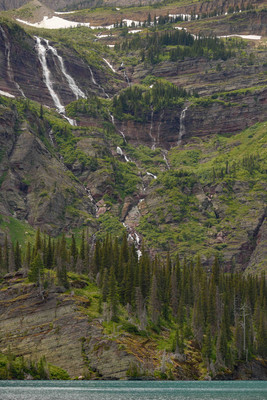
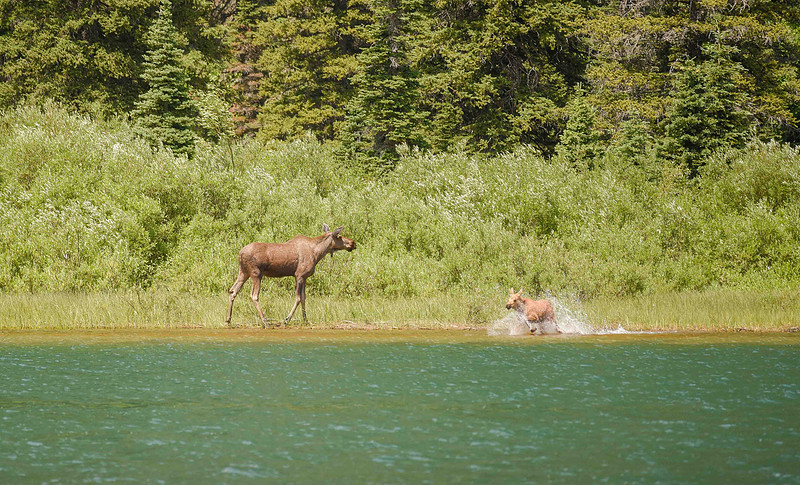
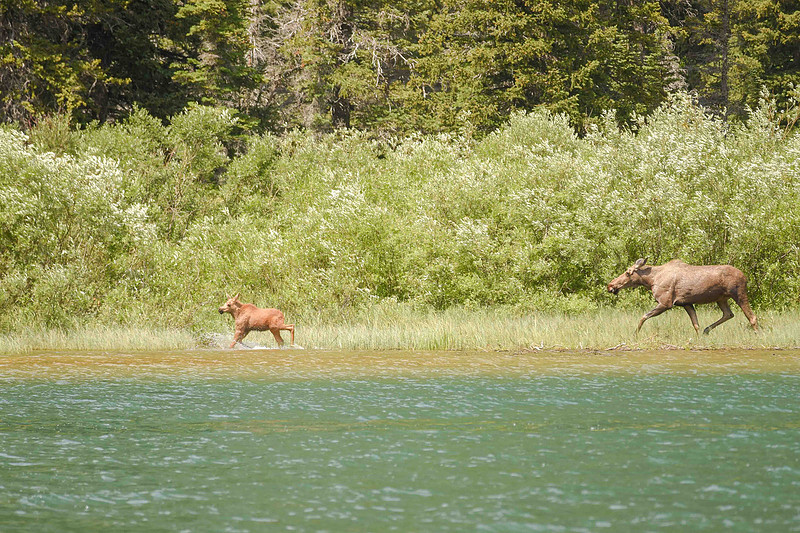
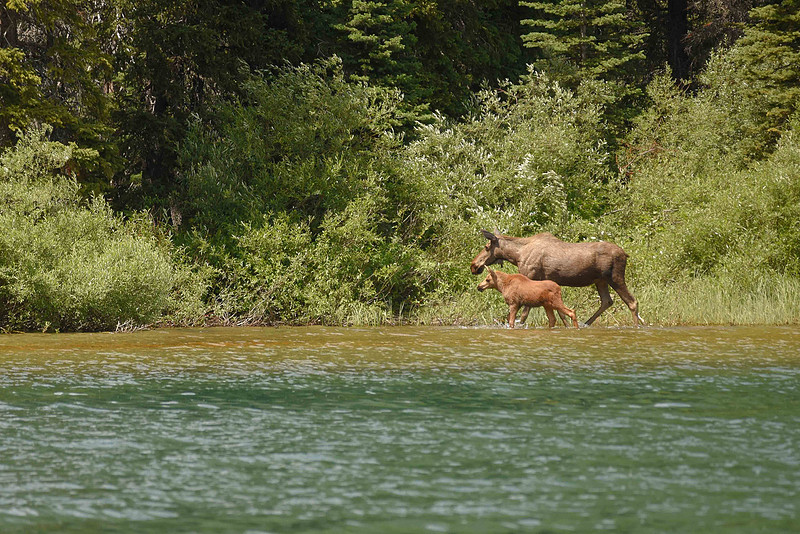
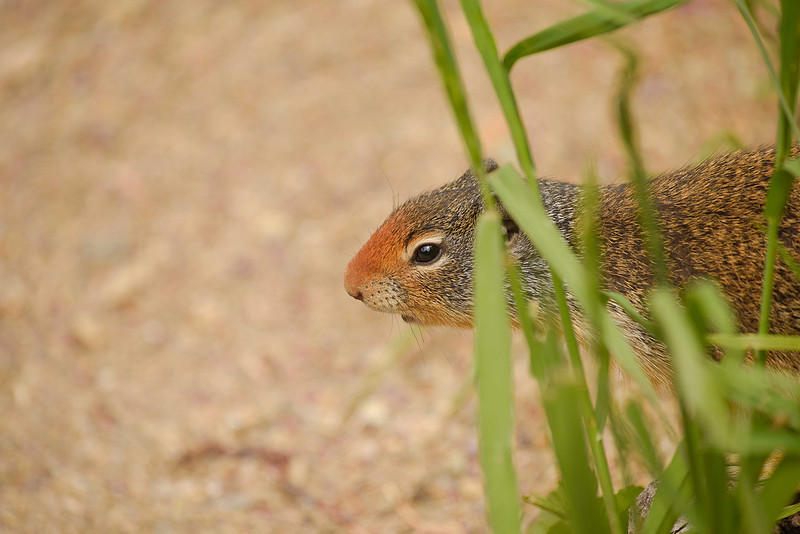
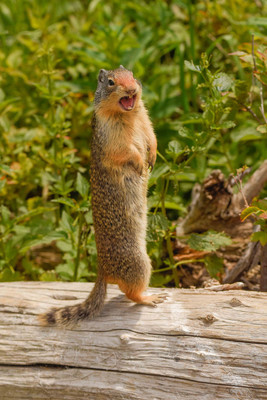
My next loon survey took me to Lower Grinnell Lake. The lake itself was a bust. No loons, adults or chicks. I didn’t expect to see any. No nesting loons had been recorded on the lake in recent years. I’d been to the lake a few times in past trips and had never seen one. But the trip was enjoyable. It included some lovely wildflowers like Lewis Monkeyflower (Mimulus lewisii) and Western Foamflower (Tiarella trifoliata) a surprise treat watching a momma moose trying to keep up with her very energetic young calf and lunch with a Columbia Ground Squirrel.
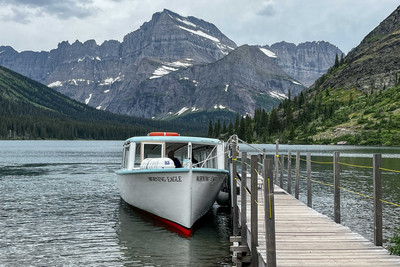
My survey completed, took advantage of a boat ticket I had purchased earlier that day, saving my tired feet from an additional 2 miles of hiking. One of the park's concessionaires offers boat tours on Swiftcurrent and Josephine lakes. Before boarding I enjoyed a conversation with one young man who was assisting in their maintenance and running the concession. The boats are kept on the lakes over winter in boat houses, one on each lake. Annual repairs are needed for these antique wood boats which have been running for many decades on these lakes. Tours offered are worthwhile not only for saving some miles on the trails, but for the information the guides provide.
All photos, videos and text are Copyright ©Julia Flanagan unless otherwise noted. All rights reserved.
Next Up: The North Fork
|